Author’s Note
Some of the information in this post comes from an article published in the Shenandoah Evening Sentinel that featured an actual interview with Alvin Tyner. The same article also contains the official military summary describing the actions for which Alvin was awarded the Silver Star.
The events and details presented in my account of the battle are fictionalized. However, they are grounded in historical accounts, including interviews with soldiers who fought in this campaign, as well as Alvin Tyner’s own words.
My intent is to remain faithful to the historical circumstances and the experiences of the men who fought there, while using fictionalized details to bring Alvin’s story and the events of the battle to life.
The Man We Knew
When I was growing up, Alvin Tyner was simply Alvin.
He was a family friend. Our families had known each other for as long as I could remember. I think my mom and he may have actually attended school together in Randolph, Iowa. We attended the same church, camped together and went on vacations together. His wife, Mildred played bridge with my mom and belonged to many of the same social clubs. Like so many in Shenandoah, Alvin would also hang out at my dad’s gas station catching up on the latest gossip, bullshit or perhaps have a snort of Kesselers. The Kesselers were located behind the NAPA Air Filters, Part Number 2088 as I recall.
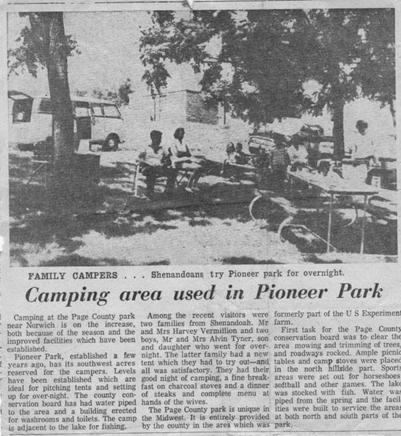
I have inserted an article that appeared in the local paper, The Evening Sentinel, regarding our families camping together at a local county park called Pioneer Park. During these years we camped in tents, used very poorly designed air mattresses but did all the cooking around the campfire or gas stove. Best food in the world.
It seems like at least twice our families went on vacation together at Silver Dollar City near Branson, Missouri. I don’t have any pictures from the time, but I managed to save and digitize some 8mm videos of the vacation including Go Cart racing, sliding down a huge slide and a visit to one of the local cave attractions.
For many years Alvin worked at the Genuine Parts store in Shenandoah, so when dad needed auto parts, that is where he would typically go to get them. For a while he was also my dad’s bookkeeper. I remember him working on those books (no computers in those days), with just a manual adding machine and a pack of cigarettes.
My brother and I were friends with Alvin’s son, Tommy and his daughter Vicky. Being boys of course, we hung around Tommy. I remember Tommy liked my Huckleberry Hound jokes. I am sure they were stupid as hell, but Tommy always egged me on, and I made up one ridiculous joke after another. Huckleberry Hound was a popular cartoon character in those days.

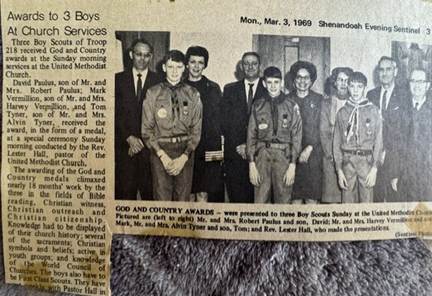
Tommy was three years older than me, but he was in the Boy Scouts with us. He and my brother earing their God and Country Merit bade. That was a big deal in those days. Below is a clip from the Evening Sentinel about that accomplishment.
Alvin wasn’t the kind of man who demanded attention. He was quiet—almost introverted. He didn’t tell long stories or try to be the center of a conversation. He seemed perfectly comfortable sitting back and listening while everyone else talked. To me, he was simply Tommy and Vickie’s dad. Mildred’s husband. Just another guy that dad hung around.
I had no idea that the quiet man sitting around the campfire had once led American soldiers through some of the most violent fighting of World War II. I didn’t know about the Silver Star he was awarded. I didn’t know about the battle on the Moselle River. I didn’t know that when the men around him were falling during battle, Alvin Tyner had stepped forward and taken command.
I didn’t learn all that until many years later. I came across a newspaper account describing the actions of Alvin during the Battle of Metz in France. Surely it couldn’t be the same man, I thought. But it was.
The quiet man I remembered from church and family camping trips had once stood on the eastern bank of the Moselle River with his platoon leader and platoon sergeant both casualties, and he Alvin took command.
My brother recently told me a story about the day he learned that Alvin’s son Tommy had died. My brother was working at my dad’s gas station, back in 1985. He was busy changing a tire when Alvin came by the station. Like so many friends of my dad, he was content hanging out at the gas station just watching the activity, listening to bullshit conversations, or maybe taking a drink in the back room This particular day, Mark said Alvin just followed him around, not saying much. Finally, he just said “Tommy died last night”
My brother Mark was astounded. “What did you say?”
“Tommy died last night in a fire”. That was it. Short and to the point. This was the quiet man. Of course, my brother did not know what to say. As if Alvin had not seen enough misery in his lifetime his only son passed away, way too early. Then Alvin just walked away.
To maybe understand the man we knew, we have to go back to where his story began.
Alvin Tyner grew up in Fremont County, Iowa, where the land rolled gently beneath the wide Midwestern sky. Alvin was the youngest of a pair of twins born to Alvin W. and Iva (Trewet) Tyner on December 20, 1921, about seven miles southeast of Randolph, Iowa. He and his twin brother Melvin started country school at the age four and both graduated
from Randolph High School in 1937.After high school, Tyner and his twin worked on his parents farm and together they worked around all the neighboring farms until they went into the service. They were both drafted on the same day in 1942, most likely in July.
He became part of the 95th Infantry Division, a division that would eventually fight its way across France and into Germany as part of General George S. Patton’s Third Army.
The boy from Fremont County was now a soldier. He learned to march. He learned to shoot. He learned to obey orders. And, eventually, he learned something no training could truly prepare a man for: how to fight.
By the fall of 1944, the Allied armies had pushed deep into France. The German Army was retreating, but retreat did not mean surrender. The farther the Americans advanced, the harder the Germans fought to slow them down. The 95th Infantry Division was moving toward the city of Metz. Metz was not simply another French city. It was a fortress city. For centuries, armies had recognized the strategic importance of the region. Fortifications surrounded the city, and German forces had transformed the area into a formidable defensive position. The Americans knew they were approaching a difficult fight.
On the western side of the Moselle River, the soldiers of the 95th Infantry Division had already captured three large German bunkers positioned on high ground. The hill behind them was secure. But across the river lay their next objective. Metz. The Germans knew the Americans were nearby. They were waiting.
The night before the crossing, Company E sent a patrol toward the river. Alvin was among them. Their mission was to assess the bridges and determine what kind of crossing the Americans might be able to make. They moved carefully through the darkness. Nobody knew exactly what awaited them on the other side. Then the night erupted. The Germans blew the bridge. The explosion shook the ground. A tremendous roar rolled across the river as pieces of steel, concrete, and debris were thrown into the air. The soldiers instinctively dropped to the ground. Fragments came crashing down around them. When the noise finally faded, the men slowly lifted their heads. The bridge was gone. The Germans had made their intentions clear. They weren’t going to make the crossing easy. The Americans would have to find another way.
The next day was cold. November 18, 1944.The orders were simple: Cross the Moselle. Establish a bridgehead. Open the way for the battalion.
Alvin was one of the squad leaders assigned to the first crossing. Three squads would make the initial assault. There would be no tanks. No bridge. No safe passage. Only small boats and the river. At noon, the men pushed the boats into the water. A canal provided some protection. Trees lined the banks, hiding the Americans from German observation. For a few minutes, everything seemed almost peaceful. Paddles dipped into the water. The boats moved slowly forward. Men kept their heads down. Alvin watched the river ahead. He knew the moment they entered the Moselle, the Germans would see them. He was right. The canal emptied into the river. And suddenly the Germans opened fire. Machine-gun fire ripped across the water. German snipers had positioned themselves inside buildings along the river. The first bullets struck the water around the boats. Then they found the men. “Keep moving!” Alvin shouted. The soldiers paddled harder. Bullets snapped overhead. Water erupted beside the boats. The river was higher and faster than they had expected. The debris from the destroyed bridge had partially dammed the river, forcing water over the broken remains. The current grabbed the boats and pushed them downstream. Men struggled to keep them pointed toward the opposite shore. Another burst of machine-gun fire tore across the river. A soldier collapsed. Another disappeared over the side. Alvin could hear men shouting for help, but there was no time to stop. Stopping meant becoming a target. He looked toward the far bank. They were getting closer. Then came another burst of gunfire. The platoon leader was hit. He fell into the boat. The platoon sergeant moved toward him. Seconds later, he became a casualty. For a moment, Alvin stared at them. Then he looked around. The men were looking at him. There was no officer left to give the orders. Alvin understood. He was now in command. He had left the western bank as a squad leader. He would reach the eastern bank as a platoon leader. “Keep moving!” he shouted. The boats slammed into the opposite bank. Alvin jumped into the cold water. He stumbled forward through the shallows, pulling himself toward the bank as bullets struck the water and dirt around him. “Get off the river!” Men scrambled for cover. Some had lost their leaders. Others had been separated from their units during the crossing. Alvin began gathering them. Riflemen. Machine gunners. Men from other organizations who had reached the eastern shore. It didn’t matter where they came from. They were Americans. And they needed a leader.
Alvin found cover behind the riverbank. He looked back toward the Moselle. More boats were coming. But the Germans were still firing. The bridgehead was not secure. If the Germans pushed the Americans back into the river, the entire crossing could collapse. Alvin gathered the men around him. “Stay together.” He knew they were frightened. He was frightened too. Courage didn’t mean a man wasn’t afraid. It meant he moved forward anyway. German fire came from the buildings along the river. Alvin reorganized the squads. He placed men where they could return fire. He directed the machine guns. He pushed the soldiers forward. The Germans resisted stubbornly. Every building became a potential firing position. Every window might conceal a rifle. Every movement drew fire. But the Americans kept advancing. Alvin moved among them, shouting orders and encouraging the men to keep moving. The Germans began to fall back. Some abandoned their positions.
Others surrendered. Still others disappeared into the streets leading toward Metz. Alvin didn’t stop. The immediate objective was not the entire city. It was survival. It was holding the ground they had taken. It was giving the rest of the battalion a place to land. The bridgehead had to hold. And it did.
More American soldiers began crossing the Moselle. The bridgehead grew. What had begun with a handful of men became a larger American force. The Germans could no longer drive them back. The way into Metz had been opened. For Alvin, there was little time to think about what had happened. There were still men to lead. Still Germans to fight. Still ground to take. But somewhere in the middle of the chaos, the significance of what had happened must have crossed his mind. His platoon leader was gone. His platoon sergeant was gone. And somehow he had taken the men across. The quiet young man from Iowa had become the leader his soldiers needed.
Alvin Tyner survived the war. But the Army did not forget what he had done on the Moselle.
His actions were formally recognized. He was awarded the Silver Star for gallantry in action and also received the Bronze Star. He was commissioned as a Second Lieutenant. The Army had recognized something that the people back home could never have seen. The quiet man from Fremont County had demonstrated extraordinary courage under fire. But Alvin didn’t seem to carry the experience with him in the way people might expect. He didn’t become boastful. He didn’t make himself larger than he was. Instead, he continued serving his country. After the war, Alvin remained in the Army Reserve for another twenty-three years. He eventually attained the rank of Captain.
When Alvin came home, he came back to Iowa. The guns of France were thousands of miles away. But life moved forward. There were families. There was work. There was church. There were friends. There were camping trips. There were children growing up.
The man who had once faced German machine guns was at one time the man sitting around a campfire with me. Looking back now, I think about Alvin sitting there quietly among us. And I wonder how many times I sat only a few feet away from a man who had done something extraordinary without knowing it. History remembers Staff Sergeant Alvin Tyner. The Army remembered him. The official records remembered him. But the people who knew Alvin remember something different. We remember the man. The quiet man. The family friend. It took a newspaper article, many years later, for me to finally understand who had been sitting beside us all those years. We thought we knew Alvin. We just didn’t know his story.
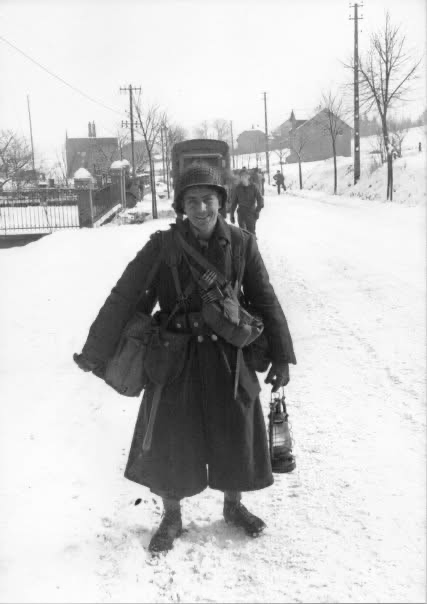
There is something about that generation. There were several men in Shenandoah who went to war and never said a thing about it. I mentioned in another post that Vince Valentine, who used to work at the Evening Sentinel, won a battlefield commission during the Battle of the Bulge. Or there was Cecil Wax, an older gentleman I worked with one summer doing a construction project. He too was in the Battle of the Bulge and served under General Patton. Cecille served three years in the U.S. Army with the 818th Tank Destroyer Battalion in Europe and was awarded the Bronze Star and other citations for his service. He participated in five major World War II battles, including the Battle of the Bulge. I was fascinated by this and pumped him for information. He really never said much. If you know your history you know how difficult a battle this was.
This was one of the coldest winters of the war. The Battle of the Bulge became the largest and bloodiest battle fought by the U.S. Army in World War II. Approximately 80,000 American soldiers were killed, wounded, or missing. Soldiers dealt with:
- Snow and freezing rain
- Temperatures well below freezing
- Mud and ice
- Wet clothing and boots
- Frostbite and trench foot
Imagine being 19 or 20 years old, standing in a freezing forest before daylight, hearing artillery and machine guns, knowing German tanks might be somewhere beyond the trees, and having little idea whether your unit was advancing, retreating, or being surrounded.
And unlike many later battles, there wasn’t necessarily a clearly defined front line. The front could change dramatically within hours. That’s a major reason the Battle of the Bulge occupies such an important place in the history of the American infantryman. It wasn’t simply a battle against German soldiers—it was a battle against cold, exhaustion, fear, isolation, terrain, and uncertainty, while continuing to fight.
None of these men spoke much about it. They came home and picked up their lives were they left off. They went back to work. They raised families. They went to church. They sat around campfires. They became neighbors and friends. Maybe that was simply the way that generation dealt with what they had seen. They didn’t consider themselves heroes. They had a job to do, and they did it. Then, when the war was over, they came home and went about the business of living.
Years later, I think about men like Alvin, Vince and Cecil differently. As a kid, I saw them simply as people I knew. Men from Shenandoah. Men who worked. Men who laughed and visited. I didn’t understand that some of them had already lived through moments of extraordinary courage and unimaginable danger. They didn’t tell us. They didn’t need to. They had come home, and for them, that was enough.
I don’t know—maybe that is why Alvin was so quiet that day when he told my brother about Tommy’s death. Maybe he had spent years learning how to carry things that were difficult to talk about. Maybe, in that moment, there simply weren’t words for what he was feeling.
He just needed to figure out how to pick up his life and move forward.
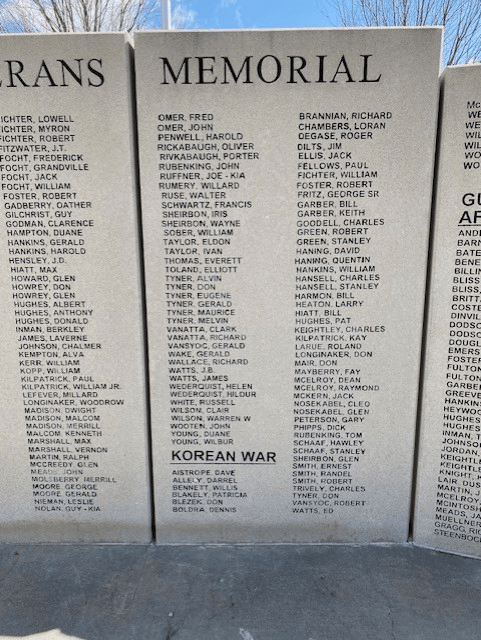
A few years ago, I stopped at the tiny town of Randolph, Iowa (population 185) and visited the Veteran’s memorial. On that memorial you can find the name of Alvin Tyner, his brother and my uncle Charles Goodell (Korean War). Looking at that tiny town; no gas station, no school anymore, one church and a bank and a general store it is hard to believe they produced so many military veterans who wanted nothing more than to come home and move on from the difficult past.


Leave a Reply